Hot water failures are rarely sudden or unavoidable. In most homes, the warning signs build quietly—reduced flow, temperature fluctuations, unusual noises, or higher power bills—until a component finally gives way. Regular servicing is the practical control that prevents minor wear from becoming a full system shutdown, property damage, or an urgent replacement.
For households relying on a Hot water system Rivervale, servicing is a low-disruption way to protect performance, extend equipment life, and keep operating costs predictable.
The real cost of “waiting until it breaks”
A reactive approach typically leads to at least one of the following:
- Unplanned outages that disrupt daily routines
- After-hours call-outs with higher labour costs
- Component failures that cascade (for example, a stuck valve causing pressure stress elsewhere)
- Water damage risks if relief valves or seals fail
- Higher energy consumption from reduced heating efficiency
Scheduled servicing reduces these risks by verifying system safety, controlling scale, and confirming the unit is operating within specification.
Scale build-up: the hidden driver of inefficiency
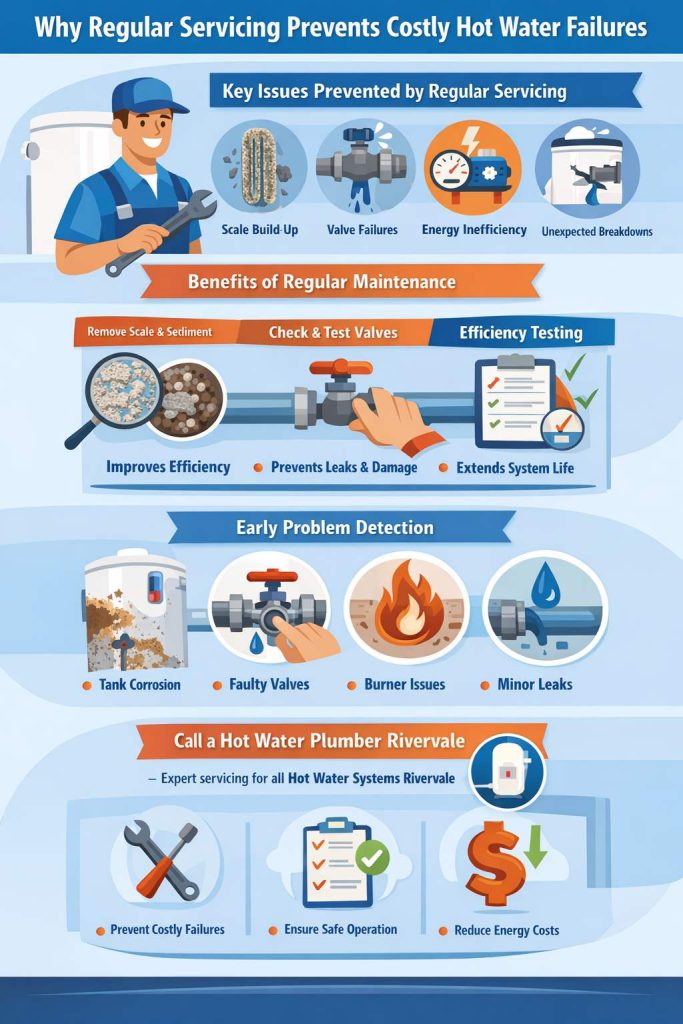
Scale is one of the most common contributors to hot water performance decline. Mineral deposits form on heating surfaces and internal waterways, which can:
- Reduce heat transfer, forcing the system to run longer to reach temperature
- Restrict flow, lowering pressure at taps & showers
- Increase stress on elements, thermostats, and temperature controls
- Contribute to rumbling or popping noises as sediment heats & shifts
Servicing focuses on identifying scale early and taking appropriate corrective action before it compromises heating components or triggers an overheat condition. The result is improved efficiency, more stable temperatures, and reduced strain across the unit.
Valve checks: small components, high consequence
Valves are critical for both safety and reliability. When they are not checked regularly, issues can remain unnoticed until they cause system failure or property damage. A thorough service will typically include condition checks and functional testing of key valves, such as:
- Temperature & pressure relief valves (to confirm safe discharge under pressure)
- Isolation valves (to ensure the unit can be safely shut off when required)
- Non-return valves (to prevent backflow issues)
- Pressure limiting controls where fitted
Faulty valves can lead to chronic leaking, pressure spikes, inconsistent temperature delivery, and premature tank wear. Regular checks also help ensure the system remains aligned with manufacturer requirements and typical household operating conditions.
Efficiency testing: protect energy spend & performance
Hot water is one of the larger contributors to household energy use, so even modest efficiency loss can compound over time. Servicing supports efficiency by confirming that:
- Thermostats are calibrated & cycling correctly
- Heating elements or burners are performing to expected output
- Pipe connections & insulation are limiting heat loss
- Temperature delivery is consistent at outlets
- System recovery time remains within normal ranges
Efficiency testing is also a practical way to identify early-stage faults that do not yet present as a full failure—such as elements drawing incorrect load, degraded sensors, or declining burner performance. This prevents the “slow slide” into higher running costs and sudden breakdowns.
Early detection of common failure points
Regular servicing is effectively a risk audit for the unit. It can reveal issues such as:
- Corrosion & tank deterioration before rupture risk increases
- Minor leaks at fittings, seals, or valves before they spread
- Electrical connection wear, heat damage, or nuisance tripping causes
- Pilot, ignition, or burner issues in gas units
- Anode wear in storage tanks (where applicable), which affects tank life
Most of these issues are far cheaper to correct early than to repair after they cause secondary damage or total loss of service.
Servicing frequency: what “regular” usually means
Servicing needs vary by system type, usage level, water quality, and manufacturer guidance. As a practical rule, annual checks are a common baseline for many households, with additional attention where water hardness, high demand, or older equipment increases risk. The objective is consistency: planned inspection & testing at sensible intervals, rather than waiting for symptoms.
If a unit has shown recurring issues, or if performance has become inconsistent, engaging a qualified hot water plumber Rivervale is the most direct path to identifying the cause and preventing repeat failures.
What a strong service outcome looks like
A service is delivering value when it achieves clear, measurable outcomes:
- Stable hot water temperature delivery
- Reduced noise & faster heat recovery
- No active leaks, seepage, or unsafe discharge
- Verified valve function & safe pressure behaviour
- Confirmed electrical or gas performance within expected limits
- Improved energy efficiency indicators (where testing applies)
These outcomes directly reduce the likelihood of emergency call-outs and extend the usable life of the system.
Conclusion
Regular servicing prevents costly failures by controlling scale build-up, confirming valve safety & operation, and verifying efficiency under real household demand. It also supports predictable budgeting by shifting hot water maintenance from “urgent repair” to scheduled upkeep.
For any Hot water system Rivervale, planned servicing is the simplest way to reduce downtime, manage running costs, and avoid preventable component failures. When performance changes, a qualified hot water plumber Rivervale can assess the unit, isolate the cause, and recommend the most cost-effective corrective action before a breakdown occurs.
